I frequently forget how much coffee in the world never sees the light of day.
How many coffees never reach a cupping table where an invested professional can taste the coffee, provide an honest quality assessment, and return the information garnered back to the person who farmed the coffee? Let alone pay a fair value for the coffee?
Hundreds of millions of pounds of coffee are purchased in local markets, driven to a warehouse, bulked with countless other coffees, and sold into low value markets where the people facilitating trade end up receiving the majority of the value created by the coffee. This faceless, nameless transaction of “commodities” is the cornerstone of the coffee industry at large. It’s the foundation of how coffee works in most places for most people.
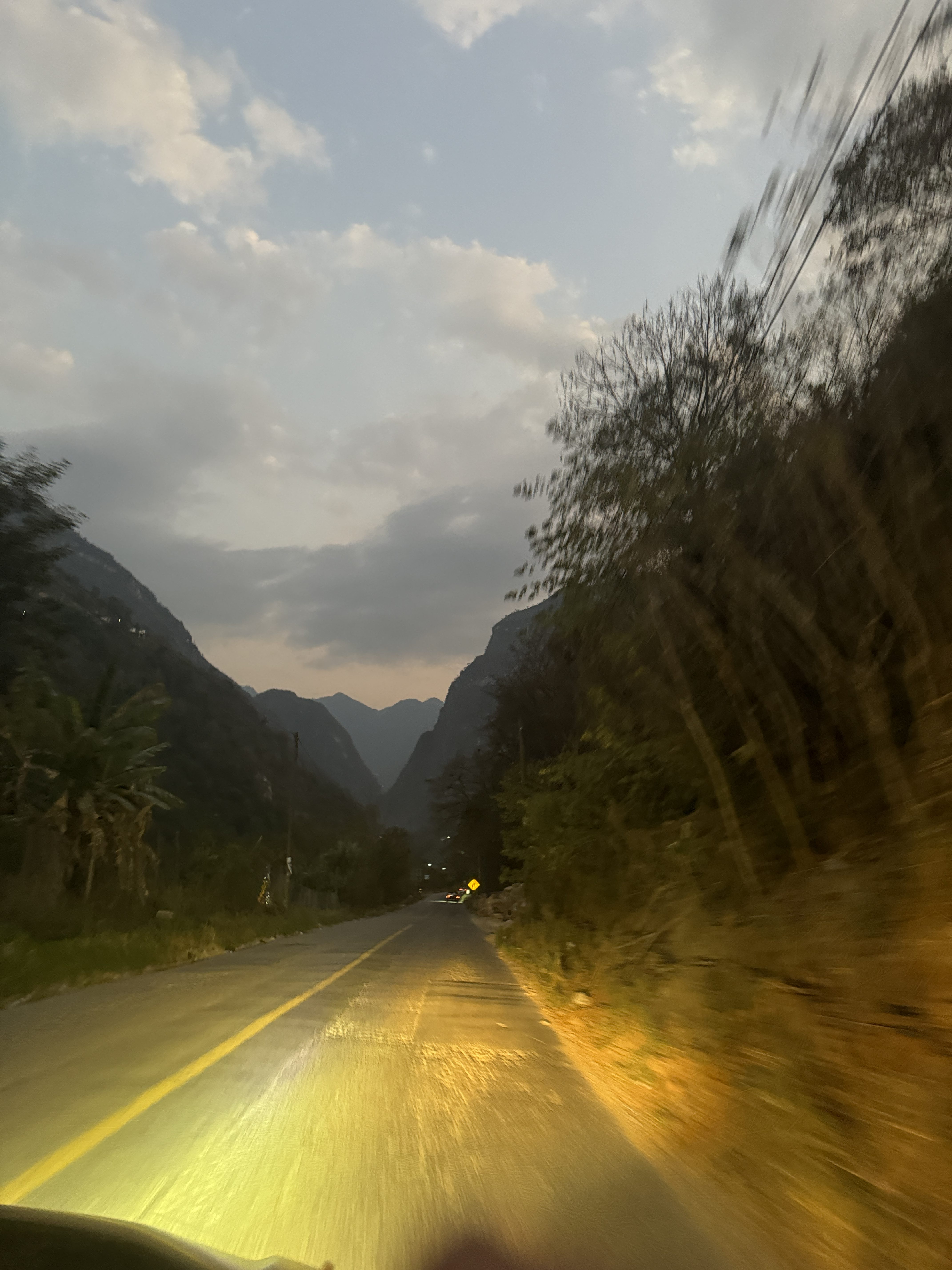
One of the most vivid images in my memory is being driven down the Pan American highway from northern Guatemala towards Huehuetenango City.
Dusk was settling among the mountains, the landscape slowly becoming surreal, becoming dreamlike. As the sun receded behind the peaks, the light from warehouses illuminated the road ahead. Everywhere I looked: warehouses bursting at the seams with coffee. Stacks upon stacks of red plastic bags containing pergamino lined the walls of the facilities. Every few minutes massive trucks pulled up to the warehouses brimming with hundreds of sacks of coffee, fresh from the farms. Men unloaded the sacks onto their backs and began new piles, reaching ceilings more than 2 stories high.
They say money doesn’t grow on trees, but coffee sure as hell does. And every single one of those sacks was money to be made for someone. And in my gut, I knew the truth: money not for the farmer, but for someone else who didn’t have to do any work to make that coffee real.
Ahead of our car was a young boy, laying on top of a pile of coffee sacks while the truck underneath drove at breakneck speeds, dodging potholes and stray dogs. Our car trailed his for miles, and I watched, almost in a daze as the boy just laid there, headphones in, his face occasionally illuminated by his phone screen.
Thoughts flooded me: “This is unsafe! This could never happen in the U.S.! Is he insane? Who would let their kid do this?!”
And at the same time, more thoughts emeerged: “This is real life here. There’s not always room in the car. Maybe he’s enjoying himself? Please, God, don’t let that car tip over, or get into an accident, or hit a huge pothole. Keep that boy safe.”
I tried to imagine how I would see the world if I was that boy. If my parents made me load up an old rusty truck with thousands of pounds of coffee, the work of an entire harvest, maybe even the coffee I’d helped pick from the trees, and then ride on top of the bags for hours upon hours on a potentially deadly road, just to get paid.
If I was in his shoes, I bet I’d see coffee a different way.
Maybe I would see it less romantically. I wouldn’t see those beans as the medium for flavors that can “wow” someone in a Upper East Side cafe, but just as seeds that ultimately keep food on the table, pay the bills, and keep life going. And maybe it’s vain to imagine myself in the head of someone who I don’t share many life experiences with. Or maybe it’s a practice of empathy. Sometimes it’s hard to tell.
All of this is to say that most coffee produced isn’t specialty by the abstract quality standards we professionals hold ourselves to. But it’s all special. Every single bean comes from a place, from a person or family whose life depends on the rain, the wind, the sun, and the soil to provide them with the means to make a life marked by dignity, not just survival.

Late into the night I was dropped off at my hotel. To my left, a casino, to my right, a nightclub. Signs were pointing to a pool somewhere in the back of the building. The brightness of chandeliers nearly blinded me as I stepped into the building and checked myself in, setting my dusty bags on the spotless marble floors.
I sat in my room, reflecting and drinking from a small glass bottle of Mora Quetzalteca, trying to come to grips with the fact that my purchase of 500 bags of Guatemalan coffee doesn’t even make the smallest dent in a system that sets farmers up to fail. I called a friend who’d traveled with me to Guatemala the previous year. I told him about what I saw and what I thought, but he didn’t have much to say. He’d just returned from a stressful first-vacation-with-newborn and was exhausted. I was exhausted too, but my mind was reverberating.
When I talk to other coffee buyers there’s one singular experience we all share: the solitude that comes with being alone, sometimes for weeks on end, and no one truly knows what the hell you’re seeing or doing, or how it makes you feel, the impressions that anchor onto your soul.
A few days later I’d be home and the majority of the sights, smells, and sounds of the drive dulled and faded like an old photograph. Memory doing what memory does best: forgetting all but the most potent images.

Earlier this year I traveled to Nicaragua, Honduras and Guatemala back to back. I visited a scrappy co-operative in Las Sabanas that’s beginning to see the light at the end of the tunnel after many years of nearly going broke each harvest cycle. Strong and visionary female leadership was turning the tides for the co-op, as well as investment from two long-term buyers who are industry leaders in relationship driven coffee. In Honduras I visited another co-operative who were only 2 years into their foray of producing specialty coffees after decades of selling into the commodity market. A man from their community had become a professional cupper, and returned to his home, a community of largely indigenous Honduran people, to share the opportunity and vision of earning more for their work by creating specialty coffee.
In Guatemala I returned to Huehuetenango again and was greeted by friends with hugs and plenty of strong beers. The harvest was nearly finished, and it’d been a bear: the C Market had gone off the rails during peak harvest, prices were shooting through the roof, and the co-operative was struggling to pay farmers even the going local value for their coffee. They were worried I’d significantly reduce our volume committed, or worse, purchase nothing at all. We sat in their meeting room right above their warehouse, which was filled to the brim with some of the best coffee Guatemala has to offer, a palpable sense of tenseness in the air. The reality: I’m the buyer and I hold the power of success or failure for this co-operative.
But I reaffirmed my commitment to them, as farmers, as a community, a business, and more than anything else, as friends. My cup is filled because no one at Wonderstate has ever told me to “go and push back” on the price farmers ask for, haggling over every cent. Instead, we pride ourselves in paying more, and dammit we do it. It’s our job to figure out how to sell the coffee, and we don’t force that back onto the farmers we work with. That’s something I can hang my hat on, a source of joy and hope in a system that often does the complete opposite.

A few weeks ago I ordered a cup of coffee in one of the premier cafes in New York City. Brewed by hand, with minerals added to the brew afterwards to calibrate the perfect flavor (though to me it was the saltiest coffee I’d ever tasted), the space oozed the elitism at the top end of the coffee sphere. Even I, someone who’s been doing this for more than 10 years now, felt out of place.
With my mug of brown saltwater I walked over the retail shelf to see what roasters the cafe was featuring. What I noticed immediately wasn’t the roaster’s names, but the names of the farmers whose coffees were found in the playful little bags. I’d seen the same names all over NYC in nearly every specialty cafe. “Anaerobic Gesha,” “Cofermented with Lychee,” “Thermal Shock Castillo”: all the right words in a market that values the exotic, exclusive, and novel above all else.
In some way I guess you could call this a version of a “win,” some farmers are getting global recognition for their work, and are probably getting paid well for it.
But as I looked at those bags I thought about that boy on top of the Toyota. Would his family’s coffee ever be served in a place like this? Would the farmers from Nicaragua, who just a few years ago were selling their coffee for $1 a pound, ever be highlighted in such a manner? And what about my friends in Guatemala? I love their work, but even a close colleague of mine said their coffees were “a bit boring.” And compared to a thermal-shock-anaerobic-gesha, I’m sure their coffee is, on some level, boring.
Do I have to grade coffees as a part of my job? Do I judge coffees on my perception of acidity, sweetness, transparency, and character? Do I try to sell our coffees to cafes just like this one?
Yes.
Do I always consider the people behind the coffees as a judge their quality? Do I remember the people I’ve met who work harder than I’ve ever worked, whose payment relies on my score? Do I care?
The answer depends on the day, my mood, my connection to the people or the coffee I’m tasting. I try to be objective, but there’s no real objectivity in coffee. There’s perception, and perception of perception. People want what other people want, that’s why the same 5 farmers are featured in every cafe in NYC.
But I still believe to this day that some of the best coffee in the world is forgotten. It’s sitting in a warehouse somewhere off the Pan American highway, destined to be blended with coffee from hundreds, if not thousands of other farmer’s coffees. Reduced to something that’ll be pre-ground and sold on a grocery store shelf. If we’re lucky, the bag may just say something about being “from Guatemala.”
Next Wednesday I’m off to Colombia. During my trip I’m going to visit an area that may have the best coffee in the country. Five years ago I purchased a coffee from this neighborhood, and it remains one of my favorite coffees I’ve ever tasted. Since then I’ve been completely unable to find anything that evenly remotely captures the essence of that particular coffee.
And five years later, I’m finally going to the place this coffee came from. Right now most of that coffee is just like what I saw on the Pan American highway: sold into the local market, transported to a warehouse, and gone for good. You won’t see the name of this area on any bags from reputable roasters, and a couple of Google Searches may just yield a few hits from roasters who’ve featured these coffees in the past, but they are few and far between.
Some may say Colombia is “combed over.” Hell, people say there’s no more “good” coffee to be found in the world. The best coffees already secured by the most competitive buyers. Nothing new, just competition for what’s already established, has a brand recognition, access.
But I don’t buy it.
I believe best coffee in the world probably hasn’t been tasted yet. It’s out there waiting for someone to care enough to show up, taste it, and say:
This matters.
Leave a Reply